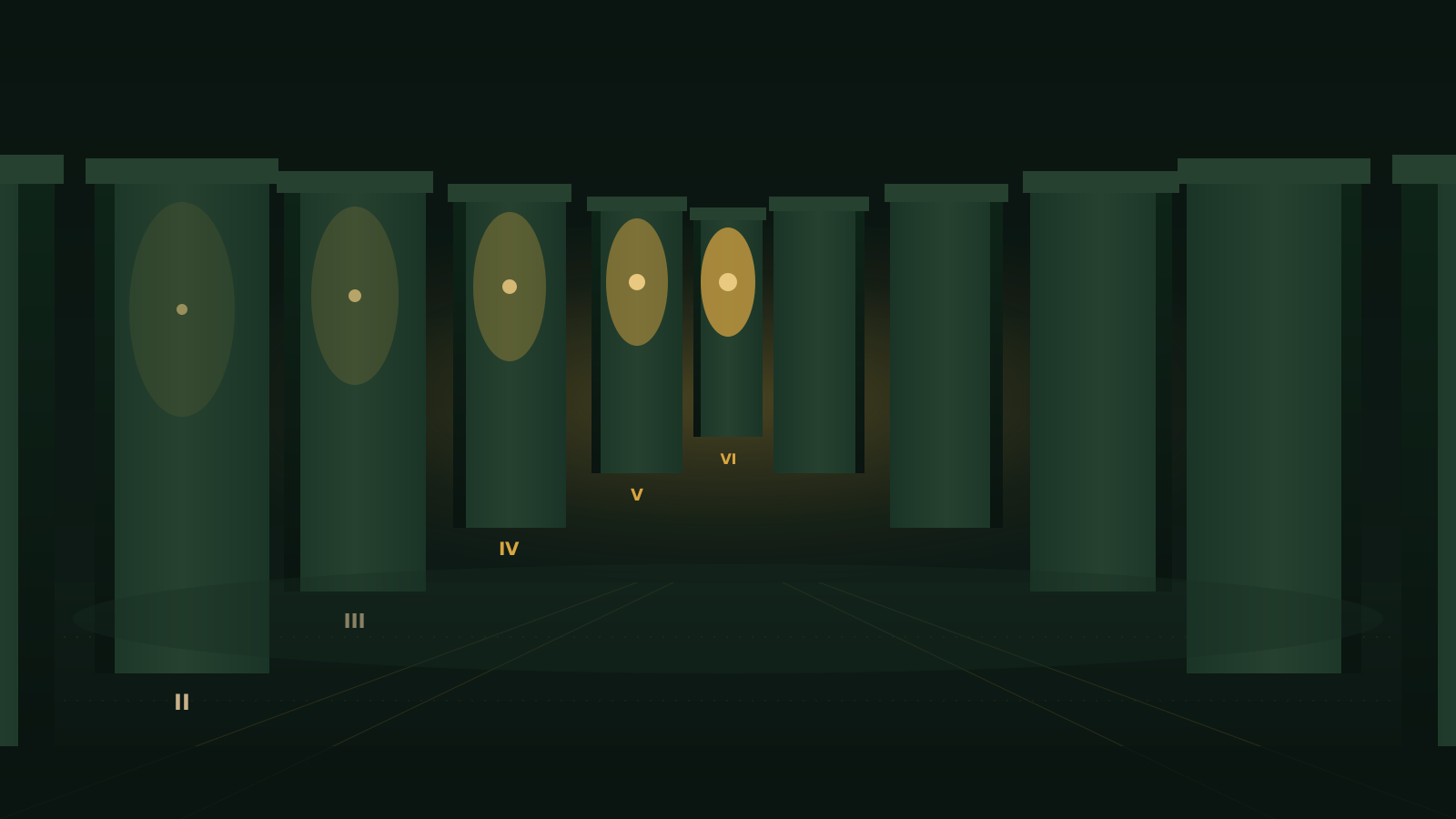
Traditional investment diligence asks one question: can this return capital? That is a necessary question. By itself, it explains too many failed projects in emerging markets. The Six-Pillar Filter is what APPOD adds on top.
Anyone who has spent time evaluating African or Caribbean projects has seen this pattern. A well-run financial diligence produces a green light. The deal closes. Capital moves. Two years in, the project has stalled — not because the unit economics were wrong, but because the government changed, or the community rejected the project, or the founder left, or the technology never landed in a context that could operate it.
Traditional diligence catches financial risk. It doesn't catch the risks that actually kill emerging-market projects, which are almost always non-financial. The Six-Pillar Filter is the pre-filter that runs before the financial diligence starts. Any project that fails a pillar is out. No exceptions.
The six pillars, one at a time
1.Futuristic
The project must be forward-thinking, not a copy of what worked in 1995. We're not funding another rural clinic that runs on paper records because we already know how that ends. We fund the rural clinic that runs on a solar microgrid, a sovereign electronic health record, and an SMS follow-up loop. Futuristic means the project is designed for the next 20 years of infrastructure, not the last 20.
2.Problem-Solving
The project must solve a real, documented friction point. Not a whitepaper problem — a friction point that citizens or businesses in the host country can name and describe in specific detail. Every project on APPOD publishes the friction point it solves as part of its Cultural Impact Statement. If the founder can't articulate it in one paragraph, the project fails this gate.
3.Human-Centric
The project must measurably improve the quality of life of the citizens who live where the project operates. This is the pillar that catches extractive deals disguised as development. A copper mine that ships every ton to a foreign refinery, employs 40 expats, and leaves the local town with degraded water isn't human-centric. A cassava-processing cooperative that trains 60 local farmers to double their yield and sells into the regional market is.
4.Economic Engine
The project must create sustainable local jobs. Not construction jobs that end when the site is built. Ongoing, dignified, wage-earning work that keeps producing paychecks after the investor has been paid back. Every project publishes a jobs number as part of its ownership ledger entry, and that number is verified in the site-visit reports.
5.Cultural Harmony
The project must respect the political, religious, and social fabric of the host nation. This is the pillar that catches projects that look excellent on paper but were designed by someone who never asked the local community what they wanted. Cultural harmony is not consensus — it is the absence of predictable political blowback that would kill the project in year three. The Country Leader owns this gate.
6.Tech-Powered
The project must be backed by a technology partner that can actually deliver. In practice, that partner is TechFides — the Execution Shield. Tech-Powered means the project has a real operational stack, not a pitch deck. Milestones are tracked in real time. Financial flows are on-chain or reconciled monthly. If the site is offline for a week, someone gets paged. Tech-Powered turns the platform from a marketing site into infrastructure.
Why this changes the diligence conversation
The Six-Pillar Filter is the pre-flight check. It runs before the six-gate Vetting Gauntlet begins its detailed work — identity verification, chain-of-title review, cap-table reconstruction, Country Leader sign-off, Ledger entry. Only projects that clear the pillars enter the Gauntlet. Only projects that clear the Gauntlet reach the Certified Ownership Ledger. Only projects on the Ledger are visible to investors and donors.
What that means for an investor who lists on APPOD: every project they evaluate has already survived a screen that most emerging-market deals never see. What that means for a founder: the projects that pass are the projects that don't have to spend their first two operational years explaining themselves to skeptics. What that means for a host country's government: the platform is filtering out the deals that would have made bad political headlines. What that means for a foundation or church funding grants: the stewardship story is legible from day one.
What the Six-Pillar Filter is not
It is not a moral certification. It is not ESG in a new hat. It is not a substitute for the financial diligence that must still happen after the Gauntlet closes. It is not a promise that every certified project succeeds — it is a promise that the projects that fail will fail for reasons the platform accepted upfront, not for reasons that anyone paying attention could have seen and screened.
It is a diligence standard. It exists because financial diligence alone hasn't been enough to protect emerging-market investors, founders, or the communities that live where the project operates. It exists because the pattern of failed African deals is legible, and the pattern is almost never a spreadsheet error — it is a pillar that no one checked.
See the Filter in action
The Vetting Gauntlet and the Certified Ownership Ledger are both live on the public site.
See Vetting & Ownership →